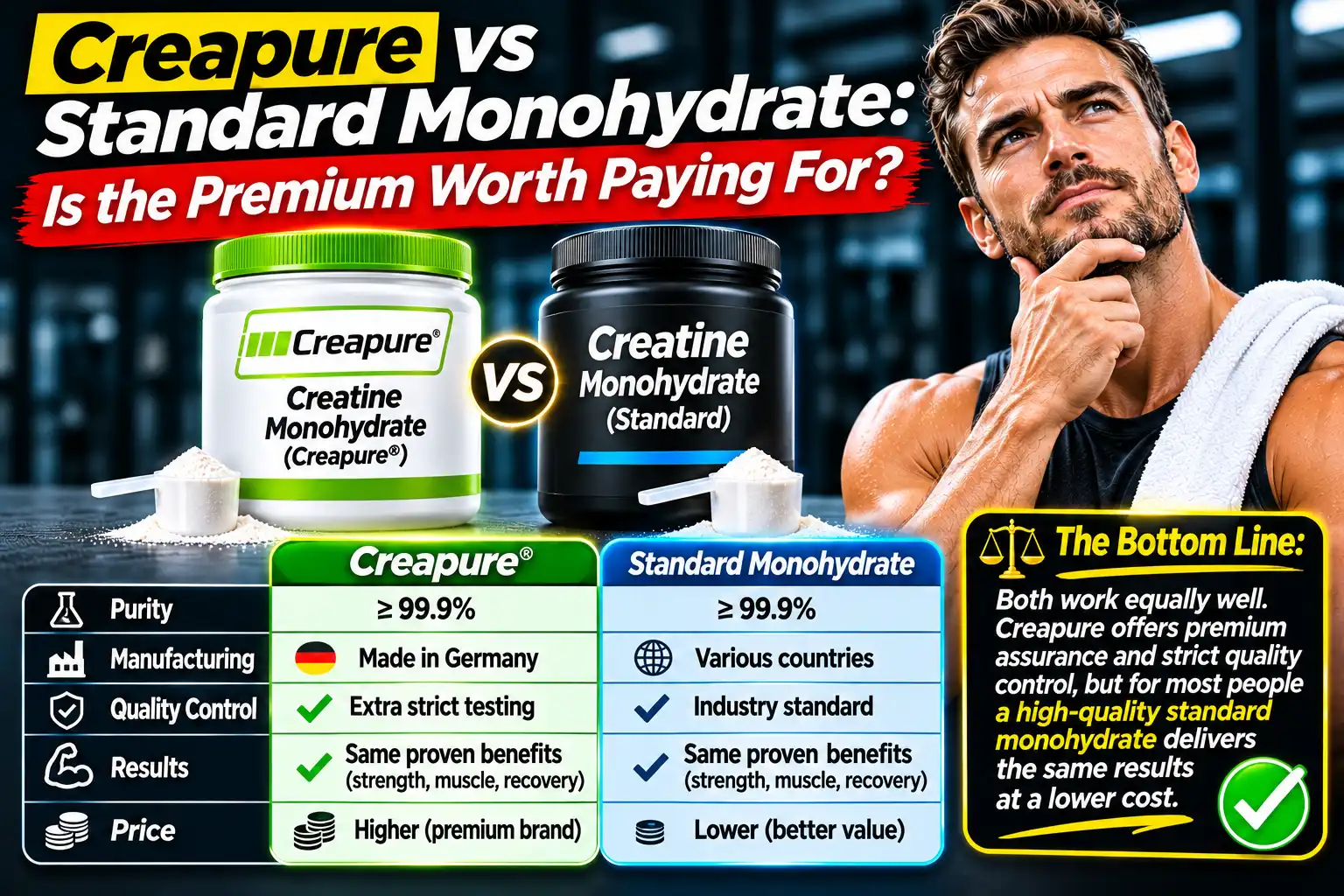
Creapure vs Standard Monohydrate: Is the Premium Worth Paying For?
Creapure is a branded creatine monohydrate made in Germany, and the extra money buys documented purity and testing, not bigger muscles. The active ingredient is the same as in any standard monohydrate, so your results come from your dose and your training, not the brand. If you value traceability and tight impurity control, the premium can make sense. If you just want effective creatine at the lowest price, a well-made, third-party-tested standard monohydrate does the same job. Below, you’ll see how the two compare, what the premium pays for, and how to get similar quality without the brand name. For background on the form itself, read why creatine monohydrate is the gold standard.
Key Takeaways
- Creapure is a branded creatine monohydrate made by AlzChem in Trostberg, Germany, and the manufacturer states a purity of at least 99.9%.
- Creapure and standard monohydrate contain the same active compound, so neither builds more muscle than the other at the same dose.
- The manufacturer reports very low impurities, including dicyandiamide (DCD) well under 50 mg/kg and dihydrotriazine (DHT) not detected, while other brands’ testing varies.
- The higher price pays for a dedicated production process, batch testing and documentation, not for better results.
- “Made with Creapure” describes the raw material, so look for a third-party seal and a lot-specific lab report on the finished product.
- Budget-minded buyers can get similar quality from a plain monohydrate that passes the same checks.
Creapure vs Standard Monohydrate at a Glance
| Factor | Creapure | Standard monohydrate |
|---|---|---|
| Active ingredient | Creatine monohydrate | Creatine monohydrate |
| Origin | One manufacturer, Trostberg, Germany | Many suppliers, varying regions |
| Purity claim | At least 99.9%, tested by HPLC | Varies by brand |
| Impurity testing | Reported per batch by the manufacturer | Varies, check the COA |
| Muscle and strength results | Same as standard at equal doses | Same as Creapure at equal doses |
| Price per serving | Usually higher | Usually lower |
Is Creapure Different From Standard Creatine Monohydrate?
Creapure isn’t a different type of creatine. It’s a branded form of creatine monohydrate, so you’re getting the same active compound you’d find in any standard monohydrate, the best-researched form of creatine.
Creapure isn’t a different creatine. It’s branded creatine monohydrate, the same best-researched compound you’d find in any standard product.
The difference lies in manufacturing. Creapure is a registered brand made by one company, AlzChem, at its plant in Trostberg, Bavaria. Standard monohydrate comes from many manufacturers in different regions, so origin and processing vary by brand.
Quality control sets them apart. According to the manufacturer, Creapure is made to at least 99.9% purity and tested batch by batch, with screening for impurities like creatinine, dicyandiamide and dihydrotriazine. Standard products may vary more in purity and impurity testing, depending on the brand.
In practice, both raise your muscle creatine stores in the same way. What you’re paying for is sourcing, documentation and testing confidence, not a new mechanism or added performance.
Is Creapure Actually Purer Than Other Creatine?
When you compare Creapure with other creatine on purity alone, the answer is yes in a specific sense. You aren’t getting a different molecule. You’re getting tighter, documented control over impurities.
Creatine is made by chemical synthesis, and impurities can form along the way. The two you’ll hear about most are:
- DCD (dicyandiamide): a by-product that is commonly capped at 50 mg/kg. The manufacturer reports Creapure well below that figure.
- DHT (dihydro-1,3,5-triazine): another by-product, commonly capped at a few mg/kg. The manufacturer reports it as not detected.
This DHT is a manufacturing impurity, not the hormone dihydrotestosterone. If you’re wondering about that one, see our guide on whether creatine causes hair loss.
Production in a dedicated facility, plus documented batch testing, lowers your contamination risk. That doesn’t mean every other creatine is impure. Quality varies by producer and testing regime, and a well-made, independently tested monohydrate works just as effectively, because the active ingredient is identical. Our creatine quality checklist shows how to read these numbers on any lab report.
Does Creapure Build More Muscle Than Standard Creatine?
Does paying more for Creapure get you more muscle? Probably not. Creapure is a branded creatine monohydrate, so its active molecule matches standard monohydrate, and the muscle-building effect should too at matched doses.
Research shows creatine monohydrate increases strength and lean mass more than training alone, but those studies evaluate monohydrate broadly. They don’t test Creapure as a superior form, and no high-quality evidence shows it produces greater hypertrophy.
- Dose matters more than brand: aim for 3 to 5 grams daily, as explained in our guide on how much creatine to take per day.
- Resistance training drives your results, while creatine supports strength, power and training volume.
- Creapure’s premium buys purity and testing, not an anabolic advantage.
If you’re buying for muscle, standard monohydrate delivers the best-supported results at a lower cost. Choose Creapure only if purity, impurity control and documentation matter to you.
Why Does Creapure Cost More Than Standard Creatine?
If Creapure doesn’t build more muscle, you’re probably wondering what the extra money buys. You’re paying for process and proof, not a different molecule.
According to the manufacturer, Creapure is made in a dedicated German facility under pharmaceutical- and food-industry-style quality systems, with every batch analyzed before release. The manufacturer also reports certifications such as ISO 9001 and GMP. Those systems add cost for the producer, and brands that use the Creapure name pay a licensing and ingredient premium on top.
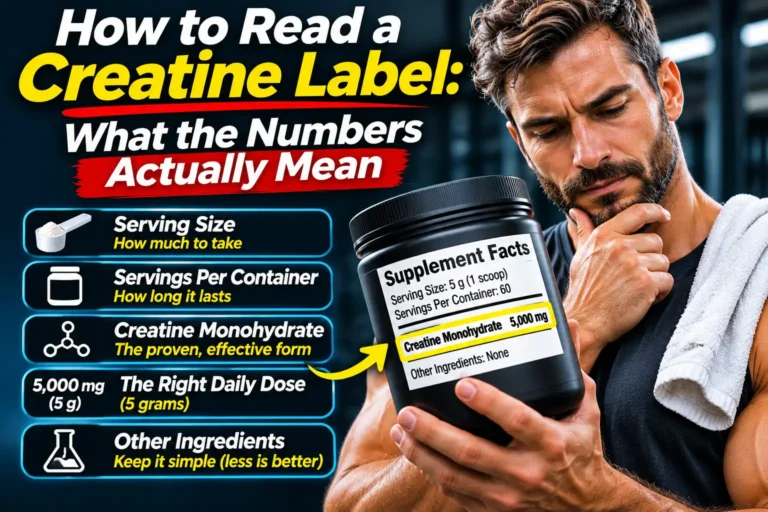
The result is a documented, traceable ingredient. The price gap varies by brand, but here’s an illustrative example of how it adds up. Say a standard monohydrate costs $0.08 per gram and a Creapure product costs $0.14 per gram. At 5 g a day, you use 1,825 g a year, so the difference is about $110 a year. Whether that’s worth it depends on how much you value the documentation. Use the formula in our guide to reading a creatine label to work out the real cost per gram of any product.
What a Creapure Label Does and Doesn’t Tell You
“Made with Creapure” tells you where the raw creatine came from. It doesn’t tell you what happened next. A brand can buy a high-purity ingredient and then blend it with other ingredients, package it in a facility with weaker controls, or skip finished-product testing.
That’s why raw-material quality isn’t a substitute for a finished-product seal. If you want assurance for the tub you’re holding, look for NSF Certified for Sport or Informed Sport, and ask for a lot-specific certificate of analysis. Some standard monohydrates, such as Thorne’s, carry a sport certification of their own, so check the certifier’s public database to confirm the exact product.
Who Should Buy Creapure and Who Can Skip It?
Most people don’t need Creapure, but a specific group of buyers will get real value from it. If you want a documented supply chain and German manufacturing, you’ll find the premium easier to justify.
Buy Creapure if you:
- Value traceability, origin and premium quality signaling over price.
- Want a documented high-purity ingredient and are comfortable paying for it.
- Aren’t constrained by budget and want a premium option.
Skip Creapure if you want the cheapest effective creatine. A well-made standard monohydrate delivers the same core performance benefits, and a reputable, third-party-tested brand gives you everything a daily routine requires. Treat Creapure as a premium refinement, not a separate performance category.
How to Get Creapure-Level Quality Without the Brand
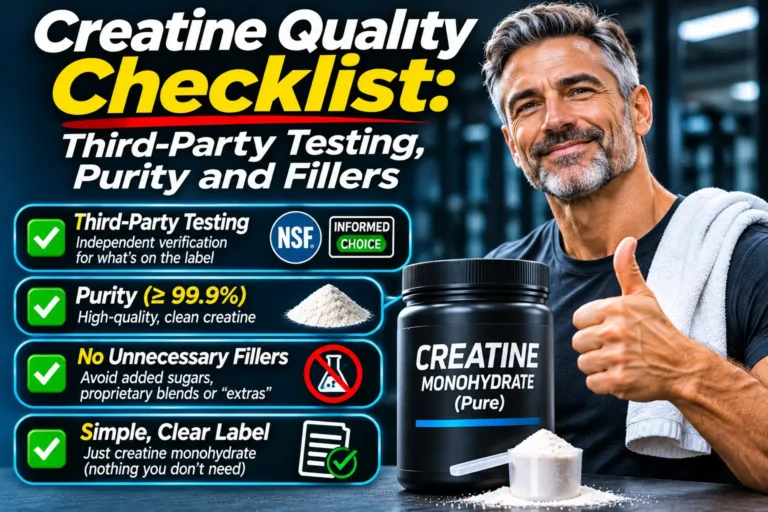
You can often get the same assurance from a standard monohydrate if it passes these five checks:
- Single ingredient: the label lists only creatine monohydrate, with no blends or fillers.
- Verified seal: the exact product appears in the certifier’s database, such as NSF Certified for Sport or Informed Sport.
- Lot-specific COA: the report matches the lot number on your tub and comes from a named independent lab, ideally ISO 17025 accredited.
- Purity and impurities: purity of 99.9% or higher, creatinine around 100 mg/kg or less, DCD at 50 mg/kg or less, and DHT not detected.
- Heavy metals: arsenic, cadmium, mercury and lead listed individually and under limits.
If a standard product passes all five, you’re getting what the Creapure premium pays for, usually at a lower price. When you’re ready to compare options, see our best creatine monohydrate supplements, our tested and ranked creatine supplements and our advice on choosing a creatine without overpaying.
Frequently Asked Questions
Is Creapure Worth the Extra Money?
It depends on what you value. It won’t build more muscle than a good standard monohydrate, so it’s worth it only if you want documented purity and traceability. If budget matters most, a third-party-tested standard monohydrate is the better value.
How Can I Tell If a Product Really Contains Creapure?
Look for the Creapure name or logo on the label, and ask the brand for the lot-specific certificate of analysis. Be cautious of vague wording like “German-quality creatine” that doesn’t name the ingredient.
Does a Creapure Label Mean the Finished Product Is Third-Party Tested?
No. It describes the raw material only. For finished-product assurance, look for NSF Certified for Sport or Informed Sport and verify the exact product in the certifier’s database.
Is Creapure Vegan?
The manufacturer states that Creapure is made by chemical synthesis without animal-derived raw materials. Check the rest of the label if you buy capsules, since the capsule shell may contain gelatin.
Do You Need a Loading Phase With Creapure?
No. Creapure is still creatine monohydrate, so 3 to 5 grams daily saturates your muscles in about four weeks, the same as any other brand. Loading 20 to 25 grams a day for 5 to 7 days only speeds things up. See our guide to the creatine loading phase for the trade-offs.
Conclusion
Creapure’s premium buys you consistency, documentation and a trusted manufacturing process, not extra muscle. Standard creatine monohydrate works just as well for strength and size, so you’re not missing out if you choose it. If you want guaranteed testing and don’t mind paying more for peace of mind, Creapure makes sense. Otherwise, pick a third-party-tested monohydrate, take 3 to 5 grams daily, and put the savings toward better food. For picks, see our best creatine for men and best creatine for women.