Best Creatine Supplements in 2026, Tested and Ranked
You don’t need a fancy formula. Plain creatine monohydrate beats every other form, and Thorne Creatine is your best overall pick. If you’re watching your budget, Nutricost runs just $0.22–$0.25 per 5g serving. Optimum Nutrition’s micronized powder mixes easily, and ConsumerLab recognizes it. Always look for third-party testing, like NSF Certified for Sport or Informed-Sport. Stick with 3 to 5g of creatine daily. Keep going, and you’ll uncover which pick fits your goals and wallet.
Key Takeaways
- Creatine monohydrate ranks highest because it is the most researched form, linked to better strength, power, and muscle growth.
- Top-ranked picks include Thorne Creatine, Optimum Nutrition Micronized, Sports Research, Naked Creatine, and Orgain, chosen for simple, minimal-additive formulas.
- Nutricost, Double Wood, and Bulk Supplements offer the best value, costing roughly $0.22–$0.28 per serving.
- Choose products with third-party testing, such as NSF Certified for Sport or Informed-Sport, to verify potency and screen contaminants.
- A standard 3–5g daily dose is safe for healthy adults; people with kidney disease should consult a doctor first.
Best Creatine Supplements of 2026, Ranked
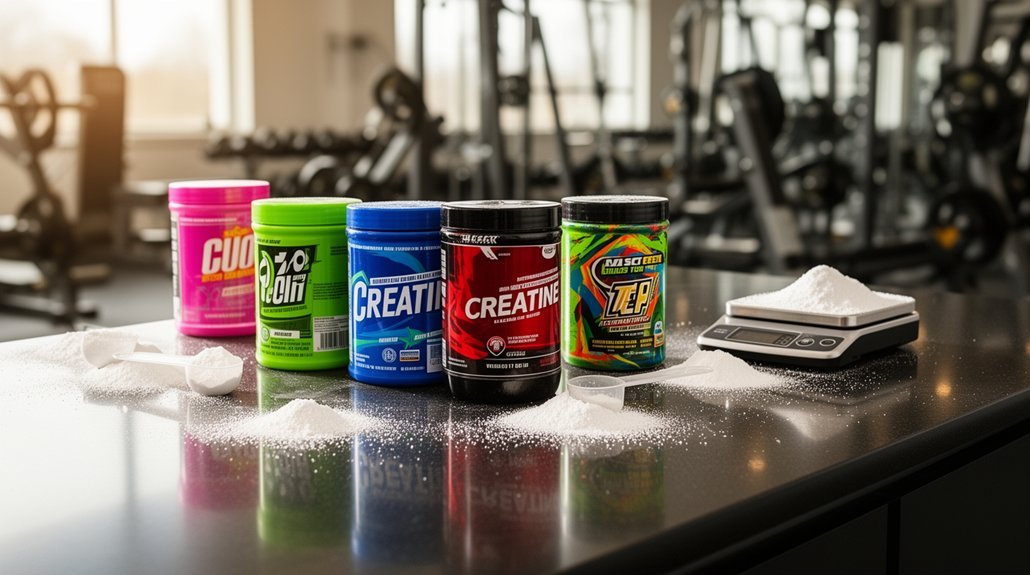
Creatine monohydrate is still the smartest buy in 2026, and the best products prove it by keeping things simple.
ConsumerLab tested 11 creatine supplements this year for creatine content and degradation into creatinine, so you’re getting label accuracy, purity, and storage stability data instead of marketing claims.
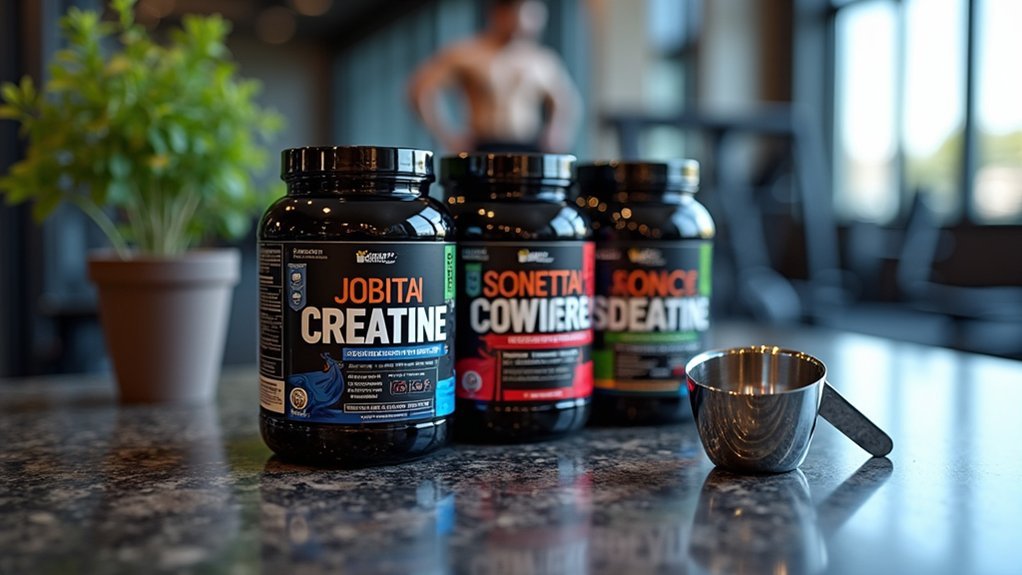
Start with Thorne Creatine, which Men’s Health named its best overall pick and ConsumerLab highlighted. Optimum Nutrition Micronized Creatine Powder, Sports Research, Naked Creatine, Nutricost, Momentous, and Orgain also earned ConsumerLab’s attention, and you’ll find they’re mostly plain powders with minimal additives.
If you’d rather swallow capsules, Life Extension Creatine Capsules made ConsumerLab’s review.
Other lists differ: Garage Gym Reviews ranked Transparent Labs Creatine HMB first, and The Independent chose Myprotein Impact Creatine. Still, you should treat HMB blends as secondary, since research favors monohydrate as the benchmark.
Prioritize tested purity, accurate dosing, and value per 5 g serving of monohydrate. Cost for 5 grams of creatine monohydrate ranges from 13 cents to $1.85, so comparing price per serving can save you real money.
Best Overall Creatine for Most Lifters
Thorne Creatine is the best overall pick for most lifters, and you can see why in how often it wins. Men’s Health and Good Housekeeping both name it their top choice in 2026 testing roundups, and it’s a simple creatine monohydrate powder built for athletes and lifters.
You don’t need anything fancier. Creatine monohydrate is the most researched form, so a single-ingredient powder is your safest default. Look for third-party testing, because quality reviews found meaningful differences in creatine content and degradation risk between products. Thorne is also NSF Certified for Sport, which indicates third-party testing for safety.
Skip the fancy blends: single-ingredient creatine monohydrate is the most researched form, and third-party testing separates good products from risky ones.
ConsumerLab tested 11 creatine supplements, and not every one passed. Thorne’s 5 g daily serving matches the standard maintenance dose that many top-reviewed products use. Expect easy mixability, neutral flavor, and no fillers.
Transparent Labs Creatine HMB also wins plenty of lists, including Forbes and Garage Gym Reviews, if you want an added performance ingredient. Otherwise, stick with Thorne’s proven, straightforward monohydrate formula.
Best Value Creatine Per Serving
Nutricost Creatine Monohydrate is the best value pick, and it’s not close. You’ll pay about $0.22–$0.25 per serving, and one roundup lists 100 servings for $23.37. The simple monohydrate formula keeps costs down.
| Brand | Cost per serving | Best for |
|---|---|---|
| Nutricost | $0.22–$0.25 | Lowest overall cost |
| Double Wood | $0.28 | 100 servings, 5 g dose |
| Sports Research | $0.30 | Informed Sport testing |
Bulk Supplements swings with package size. You’ll pay about $0.75 per serving for a small package, but only about $0.26 with an 11-lb bag. That makes it your best bulk-buy option for long-term use.
Double Wood delivers 100 servings of micronized monohydrate at 5 g each. Sports Research costs a little more, yet you get Informed Sport third-party testing. Wellah Creatine costs about $0.29 per serving, but its 3 g dose falls below the clinical dosage.
Skip mainstream brands if you’re chasing price. Optimum Nutrition runs around $0.66 per serving, and Vitamin Shoppe’s micronized creatine costs $0.46–$0.47. House-brand and bulk monohydrate almost always win on cost overall.
Best Micronized Creatine for Easy Mixing
If you want a powder that blends without a fight, Thorne Creatine is the best micronized pick for easy mixing. Each 5-gram scoop delivers micronized creatine monohydrate that doesn’t clump in coffee, water, juice, or shakes.
Thorne Creatine is the easiest micronized powder to mix, dissolving smoothly in coffee, water, juice, or shakes without clumping.
Optimum Nutrition Micronized Creatine Powder runs a close second, and reviewers repeatedly praise its easy dissolving and reliability. 1st Phorm Micronized Creatine Monohydrate is another option, with 5 grams per serving and NSF certification for sport, though some reports mention a gritty texture.
Get the smoothest results with these habits:
- Use warm liquids like coffee, where one review noted near-perfect solubility.
- Mix the scoop into a small amount of room-temperature liquid first, swirl, then top off.
- Choose shakes or smoothies when you want the smoothest texture.
Don’t expect total invisibility. Cold water can leave minor sediment, even with micronized powder, so treat “fully dissolves” claims skeptically.
Micronized creatine is still creatine monohydrate; the fine particles improve dispersion, smooth the texture, and reduce clumps. Stick with unflavored, single-ingredient formulas, and stay within the standard 3 to 5 gram serving.
Why Monohydrate Beats Creatine HCL and Gummies
Creatine monohydrate is the most studied form of creatine, and the International Society of Sports Nutrition calls it the most effective supplement for high-intensity exercise capacity and lean body mass.
Creatine HCL doesn’t have that backing, since you won’t find evidence that it beats monohydrate for muscle uptake or performance.
Gummies aren’t a stronger form of creatine either, and you’ll run into dosing and quality-control problems that powder usually avoids. Their main appeal is that they work as a convenient supplement form for people who don’t want to mix powder.
Monohydrate’s Research Advantage
When you compare creatine forms, monohydrate wins on evidence alone. The ISSN calls it the most extensively studied form and the most effective ergogenic supplement for high-intensity performance and lean body mass. Researchers use it as the reference standard, so you won’t find that depth behind HCL or gummies.
Here’s what the research backs:
- Performance: Trials consistently show better strength, power, and hypertrophy when you pair it with resistance training.
- Safety: The ISSN found no detrimental effects at up to 30 g/day for five years in healthy people, and a 2026 adolescent review found it well tolerated.
- Beyond muscle: Studies link it to better memory, lower muscle-damage markers, and bone and lean-mass benefits in postmenopausal women.
You’re choosing the option with proof, not promises.
HCL and Gummies Limitations
Although creatine HCL and gummies get plenty of marketing attention, neither has the evidence or the reliability to displace monohydrate.
No peer-reviewed head-to-head trial shows HCL outperforming monohydrate at equal creatine doses, and the few HCL studies you’ll find are small and rarely replicated.
Marketers push 1 to 1.5 g “micro-doses,” but total daily creatine matters more than the form, and standard research uses 3 to 5 g.
HCL also contains less creatine by mass and usually costs more per gram of actual creatine, so you’re paying extra for unproven benefits.
NOW’s 2024 testing reportedly found 40 to 50% of 12 popular gummy brands had little to no creatine, because heat, acid, and moisture can convert it to creatinine.
Many underdose, requiring several pieces daily.
How We Ranked These Creatine Supplements
We ranked each creatine supplement on five core factors: form, dose, ingredient simplicity, price per serving, and label clarity. Creatine monohydrate scored highest because it’s the most researched form, and we favored 3 g to 5 g servings, treating 5 g as the benchmark.
Then we checked quality and usability:
- Quality: We looked for independent testing, label-matching potency, and heavy metal screening.
- Usability: We rated mixability, taste, texture, and side effects, since you’ll only take a supplement you tolerate.
- Fit: We matched formats to your needs, favoring powders for value and capsules or gummies for convenience.
We combined these scores into one multi-factor ranking. Products that missed minimum standards for purity, dose, or formula simplicity dropped down or didn’t make the list.
Novelty formats lost points when they added complexity without a clear performance advantage. Each pick suits strength-training beginners, budget shoppers, or anyone wanting clinically familiar dosing.
Why Third-Party Tested Creatine Matters
Creatine is a simple, single-ingredient supplement, but you can’t assume the tub in your hands is accurate or clean.
Mislabeled doses and contamination can slip in during sourcing, manufacturing, or packaging, and independent testing checks the label’s claims, screens for contaminants, and, in NSF’s case, screens for banned substances.
Below, you’ll learn what that verification covers and which certifications, like NSF Certified for Sport, are worth looking for.
Mislabeling and Contamination Risks
Two quality problems show up repeatedly in creatine testing: degradation and mislabeling. You can’t spot either one by looking at a tub, so it helps to know what testers have found.
- Degradation: Independent testing found creatinine, a creatine breakdown product, above 100 mg/kg in 44% of samples. One product in a 2026 review failed for excess creatinine.
- Manufacturing impurities: About 15% of samples contained dicyandiamide above 50 mg/kg.
- Undeclared substances: Anti-doping labs have found steroids and prohormones in products sold as creatine, and cross-contamination can happen when facilities share equipment.
Most creatine monohydrate products match their labels.
Still, you’re gambling when a product lacks independent verification, because a tub can contain creatine and still deliver contaminants or less active ingredient than the label claims.
What Independent Testing Verifies
When you buy a creatine tub with no independent testing, you’re relying on the brand’s word alone. Independent labs test specific lots, and a certificate of analysis shows what they found.
Look for a named lab, a lot number, and real figures for creatine potency and creatinine. HPLC measures creatine and impurities like creatinine, dicyandiamide, and dihydrotriazine.
USP-related specs call for creatine at 99.9% of the claimed amount, with creatinine capped at 0.1%.
ICP-MS screening checks arsenic, cadmium, lead, and mercury, with results in ppm or mg/kg, not vague claims like “clean.” Some programs also test microbes, solvents, and pesticides, so check which contaminants were tested and which weren’t.
Always prefer finished-product testing over ingredient-only testing, because the final supplement is what you consume.
Trusted Certifications to Look For
How do you know a creatine tub contains what the label claims? You check for a recognized third-party seal, not vague “lab tested” marketing.
These programs verify quality and reduce contamination risk, which matters in a category where powders vary.
- NSF Certified for Sport: Confirms label amounts, screens for nearly 300 banned substances, and certifies cGMP facilities audited twice yearly.
- Informed-Sport: Signals banned-substance screening, so it suits athletes subject to anti-doping rules.
- USP Verified: Checks ingredient identity, potency, and manufacturing practices. It isn’t creatine-specific, but it still helps confirm your product matches its label.
Prefer product pages that name the certifier and exact program.
Confirm the certification covers the finished product, not just raw ingredients, and choose batch-level testing or lot-specific certificates when available.
How Much Creatine Should You Take Daily?
Most healthy adults need just 3–5 g of creatine per day, and 5 g is the practical default in most sports nutrition guidance. If you’re smaller, you’ll likely do well at the lower end. Daily dosing gradually saturates your muscle creatine stores, which makes it the better choice for long-term use.
You can also load creatine, though it’s optional. Take 20 g per day, split into four 5 g doses, for 5–7 days. Then drop to 3–5 g daily. Loading saturates your muscles faster than starting at a maintenance dose.
If you’d rather skip loading, take 3–5 g daily from the start. You’ll reach saturation more slowly, in about four weeks, but it’s simpler.
For precision, dose by body weight: 0.3 g/kg daily for loading and 0.03 g/kg daily for maintenance. Larger athletes may need 5–10 g per day to maintain their stores.
Guidance mostly assumes creatine monohydrate.
Creatine Side Effects and Safety Basics
Once you’ve settled on a dose, the next question is whether creatine is safe to take. For healthy adults, creatine monohydrate has the strongest safety record, and long-term studies haven’t found consistent health risks at standard doses.
You’ll most likely notice these effects:
- Weight gain: Water retention usually causes it, not fat.
- Digestive upset: Nausea or diarrhea can occur, especially when you take large single doses.
- Minor complaints: Dizziness or excessive sweating appear inconsistently across studies.
Research doesn’t support a reliable link between creatine and dehydration or cramps, but stay hydrated. Creatine can raise serum creatinine, which may complicate lab results without signaling kidney damage.
If you have kidney disease, talk with your doctor before you start. Evidence is limited if you’re pregnant or breastfeeding, and teens should avoid performance supplements.
Stop supplementing and seek medical advice if you develop new muscle pain, severe stomach symptoms, or swelling.
Choose the Right Creatine for Your Goal and Budget
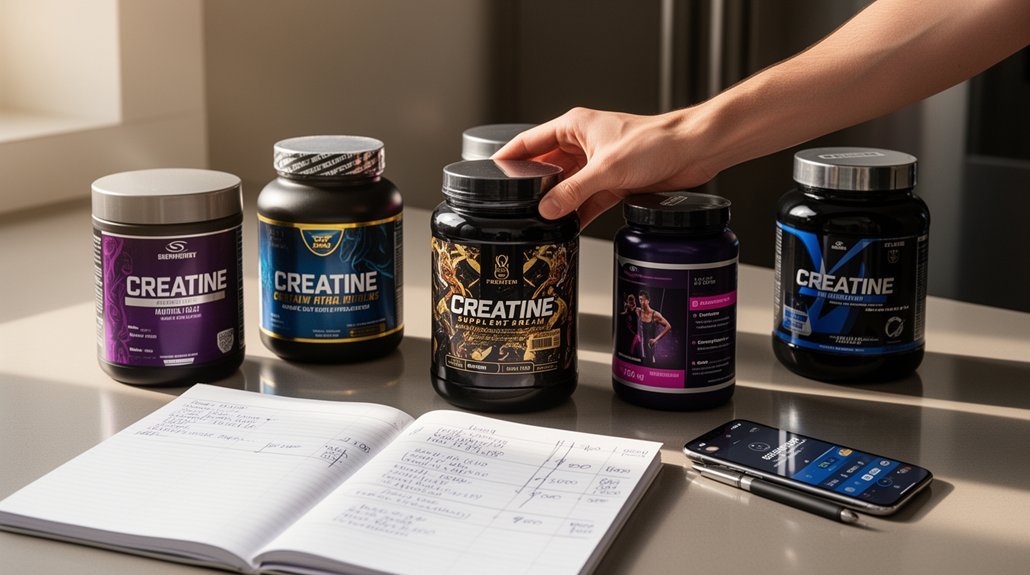
You don’t need a complicated formula to pick the right creatine, just a clear sense of what you want from it and what you’re willing to spend.
Start by matching the form to your goal, since monohydrate covers strength, muscle gain, and general use, then check that the brand tests for purity.
Once you’ve narrowed your options, compare price per serving rather than container price, because that’s where the real savings show up.
Match Creatine to Goals
When you match creatine to your goal, the answer is usually simpler than the supplement aisle suggests: plain creatine monohydrate covers strength, muscle gain, mixed-sport performance, and everyday use.
What changes is your dosing strategy.
- Strength and muscle gain: Take 3–5 g daily, and pair it with resistance training and adequate protein. You can load 20 g daily for 5–7 days if you want faster saturation.
- Mixed-sport or endurance: Creatine helps sprints and repeated surges, not steady aerobic output. If you carry your body weight, skip loading and take 3–5 g daily for about four weeks to limit water-weight gain.
- Budget and simplicity: Buy unflavored monohydrate powder in bulk, mix it into water, shakes, or meals, and skip pricier capsules.
Otherwise, choose daily maintenance.
Prioritize Testing and Purity
Because creatine is a single-ingredient powder, third-party testing is the best way to tell a clean product from a questionable one.
Look for NSF Certified for Sport, Informed Sport, or Informed Choice badges; they verify label accuracy and screen for banned substances. Brands that publish certificates of analysis give you the clearest proof of batch testing, while vague claims like “lab-tested” mean little.
Choose plain creatine monohydrate with about 5 g per serving, and consider Creapure for its reputation for purity.
Creatinine is the most common impurity: one review of 33 supplements found 44% of samples above 100 mg/kg. ConsumerLab’s 2026 review failed one of 11 products.
You don’t need to overspend, either. Inexpensive plain monohydrate works well when independent testing backs it up.
Compare Price Per Serving
Price per serving is the fastest way to compare creatine, since most products deliver the same 5 g dose of monohydrate.
Match your spending to your goal:
- Lowest cost: Naked Nutrition runs $0.14 per serving on autoship and $0.17 one-time.
- Mainstream value: Most powders land between $0.40 and $0.50, including BodyTech at $0.44 and GNC’s 100-serving tub at about $0.45.
- Premium: Flavored or branded formulas cost $1.09 to $1.50 or more, and capsules like GNC’s run about $1.04.
If you want pure creatine for strength or muscle support, you’ll get more servings per dollar by skipping flavors and extras.
Premium products often cost two to three times more than plain monohydrate under $0.50, so pay extra only when you truly value taste or convenience.
Frequently Asked Questions
Should I Take Creatine Before or After My Workout?
You can take creatine either before or after your workout, because timing doesn’t matter much. Research shows similar muscle benefits either way, and any post-workout edge looks small and inconsistent.
What matters is that you take it daily, since consistent intake saturates your muscle stores. So pick whichever fits your routine. If you train fasted or forget supplements later, take it before; if you like linking habits, take it after.
Do I Need a Loading Phase When Starting Creatine?
No, you don’t need a loading phase.
Taking 3 to 5 grams daily raises your muscle creatine stores just as effectively over time; it simply takes a few weeks instead of one.
If you want faster saturation before a training block or competition, you can load 20 to 25 grams daily for 5 to 7 days.
Just know you’ll risk bloating, water retention, and stomach upset, so split your servings.
Can Women Take Creatine, and Is the Dosage Different?
Yes, you can take creatine safely, and you don’t need a different dose than men.
Most women do well with 3–5 grams of creatine monohydrate daily, and loading isn’t required. If you’d like a personalized approach, try about 0.1 g/kg per day.
You’ll see benefits for strength, muscle, and recovery.
However, talk with a clinician first if you’ve got kidney concerns, you’re pregnant or breastfeeding, or you take kidney-affecting medications.
Does Creatine Need to Be Cycled or Taken on Rest Days?
You don’t need to cycle creatine, and you should take it on rest days.
Healthy people haven’t shown any performance, safety, or response benefit from planned off-weeks. Cycling can actually lower your muscle stores and force you to reload.
Take 3-5 g of creatine monohydrate daily, including nontraining days, to keep your muscles saturated.
If you stop, your muscle stores drift back toward baseline within about four to six weeks.
Can I Mix Creatine With Coffee or My Protein Shake?
Yes, you can mix creatine with either one. Protein shakes work great because protein doesn’t block creatine uptake, and adding carbs may help muscles absorb it.
Coffee’s fine too, since studies haven’t shown consistent performance drops, though you’ll want to watch your caffeine dose if your stomach gets upset.
Don’t stress about timing; taking creatine consistently matters most. Stay hydrated, and check with your doctor if you’ve got medical conditions.
Conclusion
You don’t need a complicated stack to get results from creatine. Pick a third-party tested monohydrate, take three to five grams daily, and stay consistent. If you’re chasing value, buy in bulk. If you hate clumpy drinks, choose micronized. Skip the gimmicks like gummies and HCL, since they won’t do more for you. Match the product to your budget and goals, then let steady training and patience do the rest.