
Creatine vs Creatinine: Why Your Kidney Test Might Look Off
Creatine is the muscle fuel you supplement; creatinine is the waste your body makes when it breaks creatine down. Kidneys filter creatinine, so doctors use it to gauge function. When you’re taking creatine, your creatinine can rise about 0.14 mg/dL, which makes your eGFR look lower than it really is. That doesn’t mean you’ve damaged your kidneys. Cystatin C testing can clear things up, and the details on prepping for your next test are ahead.
Key Takeaways
- Creatine is a muscle energy compound, while creatinine is its waste product, filtered by the kidneys and used as a kidney function marker.
- Creatine supplements can modestly raise serum creatinine, by about 0.14 mg/dL, within 4–5 days of high doses, without indicating kidney damage.
- Dehydration, intense exercise, red meat, large muscle mass, and some medications can also raise creatinine independent of kidney health.
- Because eGFR relies on creatinine, muscular people or creatine users may get misleading kidney function estimates.
- Cystatin C is less affected by muscle mass and diet, and combining it with creatinine gives a more accurate eGFR.
Creatine vs. Creatinine: What’s the Difference?
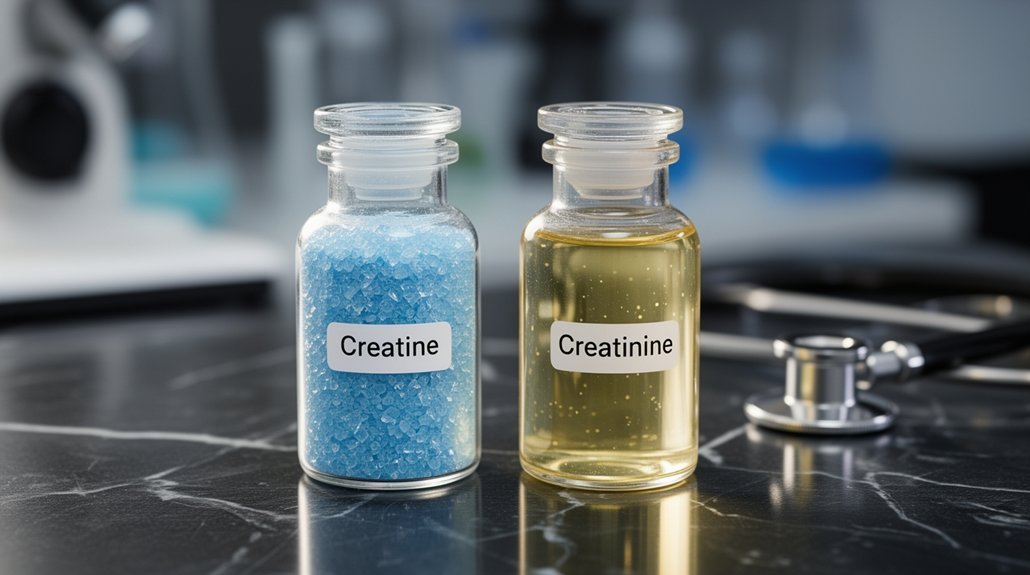
Though their names look nearly identical, creatine and creatinine do very different jobs in your body.
Creatine is a natural compound stored mainly in your skeletal muscle, with smaller amounts in your brain. It stores and supplies rapid energy for short bursts of activity. Your body makes it, and you also get it from protein-rich foods.
Creatine is a natural compound stored mainly in your muscles, supplying rapid energy for short bursts of activity.
Creatinine, on the other hand, is a waste product. It forms when creatine breaks down during normal muscle activity, and it doesn’t return to creatine or provide energy. Your body produces it at a fairly steady rate each day. Roughly 1–2% of stored creatine in your muscles converts to creatinine daily.
Creatinine circulates in your blood until your kidneys filter it out, and you excrete it in urine. That’s why doctors use it to check kidney function.
When your kidneys filter less efficiently, your blood creatinine rises. A creatinine test doesn’t measure your creatine stores directly, so don’t confuse the two on your results.
Can Creatine Raise Your Creatinine Levels?
Yes, creatine can raise your creatinine levels, because your body converts some of it into creatinine as part of normal metabolism.
The increase is usually modest and often temporary, but it can make your eGFR look lower than your kidneys’ true filtration rate. Combining serum creatinine with cystatin C gives a more accurate picture of kidney health.
That’s why you shouldn’t read a single creatinine result as proof of kidney damage, especially while you’re supplementing.
How Creatine Becomes Creatinine
Your body converts a small portion of its creatine into creatinine every day, and it does so without any help from enzymes.
Creatine and phosphocreatine spontaneously break down through a non-enzymatic cyclization process. It’s a chemical reaction, not a biological one, which is why pH and temperature influence it in the lab.
This conversion runs continuously as part of your normal muscle and energy metabolism. A systematic review of 21 studies found that creatine supplementation produced only a modest, transient increase in serum creatinine, likely reflecting this metabolic turnover.
Once creatine becomes creatinine, you can’t reverse it. Your kidneys then filter the creatinine out of your blood, and it leaves your body in urine.
That’s why creatinine shows up on routine blood and urine tests.
If you take creatine supplements, you’re adding to the pool that converts, so more creatinine can enter your bloodstream. That doesn’t mean damage.
Typical Supplement-Related Increases
Creatine supplements can raise your serum creatinine, but the increase is usually small. Meta-analyses show an average rise of about 0.14 mg/dL, which is measurable but rarely dramatic. You’ll often see it within the first week, especially during loading phases, and it can happen without kidney injury. In the same pooled analysis, researchers observed no significant change in glomerular filtration rate, which indicates that kidney function stays preserved.
| Factor | What you’ll typically see |
|---|---|
| Size | Small average rise; often within normal range |
| Timing | Most noticeable early, within 4–5 days of high doses |
| Dose | Loading raises it more than maintenance |
Some trials found no increase at all, and individual results vary. So a mildly elevated result doesn’t automatically mean your kidneys are struggling. Creatinine-based kidney estimates can look lower when creatinine rises, so screening may seem worse than your actual kidney function. Tell your clinician you’re supplementing.
Why eGFR Appears Lower
Because eGFR equations rely on serum creatinine, any creatine-related rise can make your kidney function look worse than it is. The math is straightforward: the equation uses your creatinine, age, and sex, so a higher creatinine value automatically lowers the estimate. Your actual filtration mightn’t change at all.
That’s because creatine converts into creatinine during normal metabolism. You’re generating more creatinine, not filtering less. Reviews report an average rise of about 0.13 mg/dL without harmful GFR changes.
Creatinine-based equations used alone show this effect most. Large amounts of cooked meat, recent high-intensity workouts, and certain medications, like trimethoprim or cimetidine, can also raise creatinine, so a single result may still mislead you.
Ask your clinician to interpret your number alongside other kidney markers. An additional test, such as cystatin C, can clarify your true kidney function if your creatinine-based results seem unreliable.
Why Does Creatine Make Kidney Tests Look Off?
How can a supplement that’s supposed to help your muscles throw off a kidney test?
Your body converts creatine into creatinine, a waste product that healthy kidneys filter from your blood. When you take creatine, you produce more creatinine, so your serum level can rise modestly even though your kidneys work normally.
| Factor | Effect on creatinine | Kidney meaning |
|---|---|---|
| Creatine supplements | Rises modestly | Metabolic, not damage |
| High-intensity exercise | Raises readings | Temporary |
| Diet and muscle metabolism | Changes production | Not filtration |
| Creatinine-based eGFR | Appears lower | May underestimate function |
Because creatinine-based eGFR falls when creatinine rises, your results can look worrying and trigger follow-up testing. Evidence reassures: a 2025 systematic review found a small creatinine increase but no adverse effect on glomerular filtration rate. Tell your doctor you take creatine, and ask them to review your full kidney panel, and consider urine-based testing to separate altered creatinine production from true filtration problems.
Does High Creatinine Always Mean Kidney Disease?
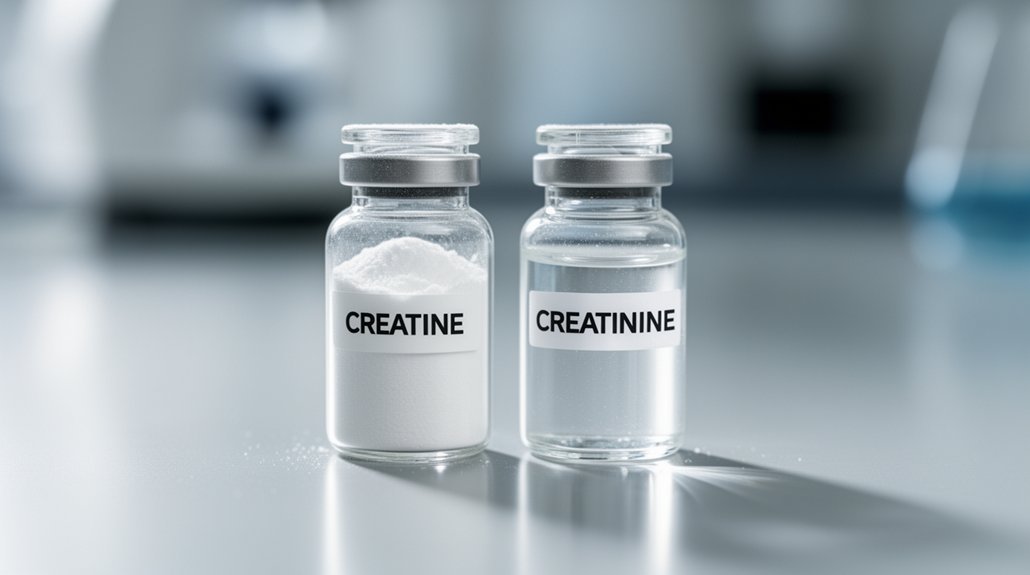
No, a high creatinine result doesn’t always mean you have kidney disease. A single elevated value can reflect kidney dysfunction, but it can also be temporary or unrelated to your kidneys. Your muscle mass, diet, exercise, hydration, and medications all influence the number.
A high creatinine result doesn’t always mean kidney disease; muscle mass, diet, exercise, hydration, and medications can all influence the number.
Several non-kidney factors can raise your result:
- Dehydration concentrates creatinine and temporarily raises your result.
- Intense exercise or a recent red meat meal increases creatinine levels.
- Large muscle mass produces more creatinine than average.
- Creatine supplements and some medications can raise measured creatinine without true kidney damage.
Kidney problems can raise creatinine too, including chronic kidney disease, acute kidney injury, infection, and urinary obstruction from stones or an enlarged prostate.
Diabetes and high blood pressure are common underlying causes.
That’s why persistent elevation matters more than one result. Your clinician will repeat the test and review your eGFR, urine results, medications, symptoms, and blood pressure.
Is Cystatin C a Better Test If You Take Creatine?
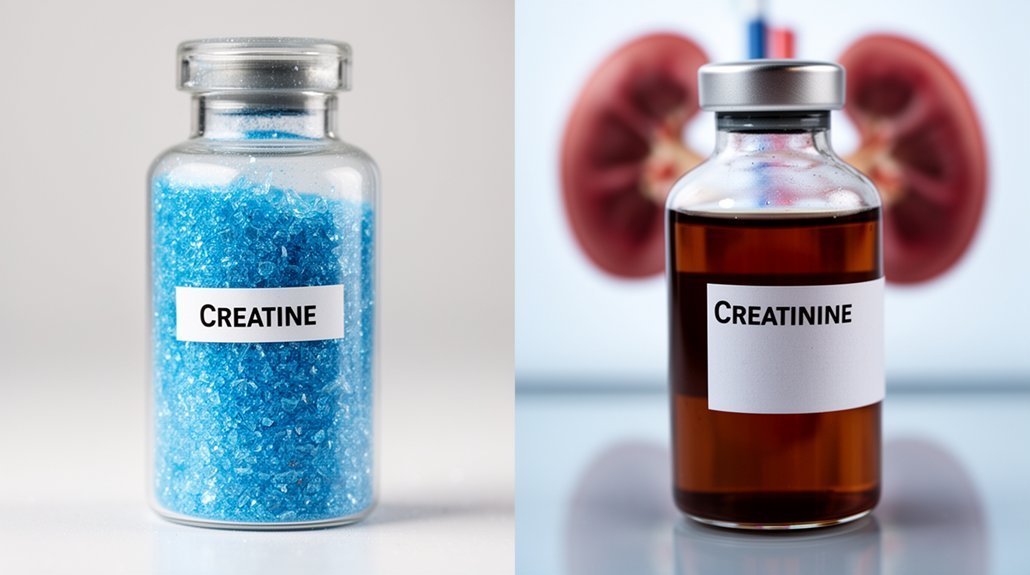
If you take creatine, your creatinine result might look high even when your kidneys are working fine, because creatinine reflects muscle mass and diet as well as filtration.
Cystatin C is a protein that your cells release at a steady rate, and it’s less affected by muscle, age, sex, and diet, so it can show whether your kidney filtration has actually dropped.
It isn’t perfect, though, since inflammation, obesity, and diabetes can also influence it, which is why doctors often pair it with creatinine.
Cystatin C Basics
Cystatin C is a small protein that nearly every cell in your body makes at a steady rate, and it gives doctors another way to estimate how well your kidneys filter blood. Your kidneys freely filter it, then the proximal tubule reabsorbs and breaks it down, so it doesn’t return to your blood.
Key points to know:
- It’s less tied to muscle mass and diet than creatinine, so it’s useful when creatinine may mislead.
- Your doctor can use it to estimate GFR when your creatinine looks unexpectedly abnormal.
- KDIGO suggests testing it to confirm CKD when your creatinine-based eGFR falls between 45 and 60 without other kidney damage markers.
- It still doesn’t replace creatinine automatically; combining both markers often gives the most precise estimate.
Creatine’s Effect on Results
Creatine supplements can nudge your creatinine up without touching your kidney function, and cystatin C usually handles that better. Creatinine comes from creatine breakdown, so your creatinine-based eGFR can look lower than it really is, especially if you’re muscular or train hard.
| Marker | Creatine effect | Best use |
|---|---|---|
| Creatinine | Often rises slightly | Baseline screening |
| Cystatin C | Little influenced | Follow-up when eGFR looks low |
| Combined eGFR | Most accurate | Clarifying unexpected results |
| Urine protein | Usually unchanged | Spotting real damage |
A higher creatinine after starting creatine doesn’t automatically mean kidney damage. If your eGFR looks unexpectedly low, ask for cystatin C testing, ideally combined with creatinine. Still, don’t ignore abnormal results; proteinuria, albuminuria, or other kidney abnormalities warrant medical review. Your doctor should weigh symptoms and urine findings.
How Should You Prep for Kidney Tests on Creatine?
Preparing for a kidney test while you’re taking creatine comes down to a few simple steps that keep your results accurate. Start by telling the ordering clinician exactly what you’re taking, since creatine can raise serum creatinine without signaling kidney damage.
- Share your creatine dose, brand, frequency, and last dose, plus any protein powders, pre-workouts, or herbal products.
- Follow fasting and food instructions exactly; you might need to skip meat for 24 hours or fast overnight.
- Skip strenuous exercise for 48 hours if the lab asks, and stay hydrated unless you’re fasting.
- Don’t stop creatine or change medications unless your clinician approves it.
Some clinicians recommend a temporary creatine hold, but the length isn’t standardized and depends on your test and health history.
A temporary creatine hold may be recommended before testing, but how long it lasts depends on your test and health history.
If your eGFR looks low, ask about cystatin C, creatinine clearance, or measured GFR. Repeating the test after standardized prep can also clarify abnormal results.
Frequently Asked Questions
How Long Does Creatine Take to Leave Your System After Stopping?
Your blood clears creatine within days, but your muscles hold onto it much longer.
You’ll usually see serum and urinary levels normalize in about 1–2 weeks, and creatine’s half-life is just under three hours.
Your muscle stores typically drop back to baseline in 4–6 weeks after a loading phase, falling fastest during the first two weeks.
Your brain might take 6–8 weeks, since your body keeps making its own creatine.
Does Creatine Cause Kidney Stones or Damage in People With Existing Kidney Disease?
Creatine hasn’t been shown to cause kidney stones, but if you’ve got existing kidney disease, you shouldn’t assume it’s safe. Evidence in CKD is limited, and experts advise you to avoid it if your GFR is very low.
Creatine can also raise your creatinine without harming your kidneys, which muddies your lab results. If you’ve got CKD, a transplant, or protein in your urine, talk with your clinician before starting.
Should Teenagers or Older Adults Take Creatine if Their Kidney Function Is Uncertain?
You shouldn’t start creatine until you’ve confirmed your kidney function. If you’re a teenager, you’ll want baseline and follow-up kidney testing first, and you should use it only in supervised, serious athletic settings at recommended doses.
If you’re an older adult, you’ll need a clinician’s input, especially with diabetes or hypertension. Ask for a test that doesn’t rely on creatinine, since creatine can make results look worse than they are.
Do Different Creatine Forms, Like Monohydrate or HCL, Affect Creatinine Differently?
Not clearly, no. Creatine monohydrate can nudge your creatinine up modestly, since some creatine converts to creatinine naturally, but it doesn’t harm your kidneys in healthy adults.
Marketers pitch HCl as more soluble, yet you won’t find strong evidence that it changes creatinine differently. Some forms, like ethyl ester, may convert more readily.
If your labs look off, ask your clinician about cystatin C, or pause creatine before you retest.
How Much Water Should You Drink Daily While Supplementing With Creatine?
You’ll want to drink about 2–3 liters of total fluid daily while taking creatine, and you can bump that to 3–4 liters during a loading phase.
Mix each dose with 8–12 ounces of water, and drink more when you’re training hard, sweating heavily, or dealing with heat.
Let thirst and pale urine guide you.
You don’t need forced overhydration, because research actually doesn’t show creatine causes dehydration or muscle cramping.
Conclusion
You’re not imagining it: creatine can nudge your creatinine higher without harming your kidneys. Don’t panic over one abnormal result. Tell your doctor about your supplement, and ask about cystatin C for a clearer picture. If you can, pause creatine for a week or two before testing, and stay hydrated. You’ll get more accurate results, and you’ll avoid unnecessary worry. When you’re unsure, let your healthcare provider guide your next steps.