What Is Creatine? A Complete Beginner’s Guide
Creatine’s a compound your body already makes from amino acids and stores mainly in your muscles. It gives you quick energy for short, intense efforts like sprints and heavy lifts. You’ll get small-to-moderate performance gains, plus more muscle when you lift consistently. Most people take 3–5 grams of creatine monohydrate daily, and you don’t need a loading phase. Side effects are usually mild, like water weight or stomach upset. Stick around to uncover the details.
Key Takeaways
- Creatine is a naturally occurring compound made from amino acids, stored mainly in skeletal muscle, and obtained from red meat, fish, poultry, and supplements.
- It helps regenerate ATP as phosphocreatine, giving muscles rapid energy during short, high-intensity efforts like sprints and heavy lifts.
- Combined with resistance training, creatine improves strength, power, lean mass, and recovery, but offers little benefit for low-intensity or endurance activities.
- Creatine monohydrate is the most researched form, with beginners typically taking 3–5 grams daily, and loading with 20–25 grams for a week is optional.
- Common side effects include water-retention weight gain and occasional digestive upset, though it is considered safe for healthy people, who should consult a doctor if they have kidney issues.
What Is Creatine and Where Does It Come From?
Creatine is a naturally occurring compound your body makes and stores, mostly in skeletal muscle. People often call it an amino acid, but it’s more accurately a nitrogen-containing organic compound built from amino acids. Smaller amounts sit in your brain and other tissues.
You don’t need to eat creatine, because it’s non-essential. Your liver, kidneys, and pancreas synthesize it from three amino acids: arginine, glycine, and methionine. Your bloodstream then carries it to the tissues that need it.
Your body makes about half of your creatine, and food supplies the rest. Typical food intake runs about 1 to 2 grams daily.
Animal foods provide it: red meat such as beef, pork, and lamb; fish and seafood such as salmon, tuna, herring, and shellfish; and smaller amounts in poultry and milk. If you eat little or no meat, you’ll get less from your diet. Supplements contain the same compound. Research on creatine appears on ScienceDirect, a platform for scientific and technical research published by Elsevier B.V.
How Does Creatine Work in Your Body?
How does your body turn creatine into usable power? You store most of it in skeletal muscle as free creatine and phosphocreatine, which works as a rapid energy reserve.
During intense effort, your muscles burn through ATP faster than oxidative metabolism can replace it. The creatine kinase reaction fixes that by transferring a phosphate from phosphocreatine to ADP, regenerating ATP within seconds. This extra energy supply during hard workouts is one reason creatine can enhance muscle performance in strength and power activities.
When intense effort drains ATP faster than oxidative metabolism can refill it, phosphocreatine steps in, donating a phosphate to ADP and regenerating ATP within seconds.
Here’s what happens:
- Uptake: A sodium-dependent transporter moves creatine into your muscle cells.
- Storage: Supplementing raises your intracellular creatine and phosphocreatine concentrations.
- Recycling: Your muscles regenerate ATP quickly during lifting, sprinting, and repeated short efforts.
- Hydration: Creatine pulls water into muscle cells, a process often called cell volumization.
Once phosphocreatine runs out, your performance drops until recovery restores your depleted stores.
Creatine doesn’t help much with steady, low-intensity activity, and it isn’t calorie-like energy. Controlled studies haven’t shown worse hydration status or thermoregulation from creatine use.
What Benefits Can You Realistically Expect?
Creatine won’t transform your body overnight, but it can deliver small-to-moderate improvements when you pair it with consistent training.
You’ll likely notice the clearest gains in short, high-intensity efforts like sprints and heavy sets, where extra reps and sustained output add up over time. Creatine helps recycle ATP, the primary energy source your muscles rely on during exercise.
Those same training gains can support muscle growth and help you maintain quality across repeated workouts, though results vary from person to person.
Stronger Short-Burst Performance
Expect one main payoff from creatine: you’ll repeat hard, short efforts with less drop-off. It supports rapid ATP regeneration, so you’ll sustain power across sprints, jumps, or lifts when rest stays brief.
Here’s what the evidence shows:
- Mean power improves during repeated sprints (effect size 0.61).
- Peak power and fatigue don’t change considerably in repeated-sprint tests.
- You’ll likely notice gains in the second half of sprint sessions.
- Body mass rises about 0.79 kg in the short term.
Don’t expect a higher single top speed. You’ll get the biggest practical edge with 6–30 second efforts and 30 seconds to 5 minutes of rest. In a six-week study of recreational cyclists, creatine-electrolyte supplementation raised overall mean power by 5% across five 15-second sprints with 2-minute recoveries.
Longer recovery or low-intensity training makes the benefit harder to see. Sprinters, weightlifters, and team-sport athletes usually get the most from it.
Muscle Growth With Training
When you pair creatine with a structured resistance-training program, you’ll typically add about 1–2 kg more fat-free mass than you would from training alone. Creatine alone won’t reliably build muscle. Training drives growth, and creatine amplifies it.
| Outcome | Typical effect | Notes |
|---|---|---|
| Fat-free mass | +1.39 kg | With resistance training |
| Body mass | +0.89 kg | Includes intramuscular water |
Expect strength to improve before size. Pooled data show about +4.43 kg upper-body and +11.35 kg lower-body strength gains versus placebo, and heavier lifting helps convert that strength into hypertrophy. Some early weight gain is water inside muscle cells, which makes muscles look fuller, but it isn’t fat gain. Without resistance training, you won’t see meaningful lean-mass benefits, so prioritize progressive overload first. Creatine also enhances anaerobic power with or without resistance training, raising peak power by about 71.27 W. Creatine is a modest, meaningful amplifier.
Faster Recovery Support
Muscle growth isn’t the only payoff you can get from creatine, but recovery is where you should keep your expectations in check. Creatine may help you restore force production faster between hard sessions, though the benefit looks modest rather than transformative.
Realistic expectations include:
- Faster return of strength and power between sessions, especially after exhaustive or repeated high-output training.
- Possibly lower creatine kinase, which suggests reduced muscle damage signals.
- Occasional relief from soreness and better range of motion, though studies disagree.
- Stronger effects when your training causes clear muscle damage.
Don’t expect reliable reductions in soreness, inflammation, or damage markers. Results vary with training status, exercise type, and timing.
Think of creatine as recovery support, not a soreness fix; it may help some people.
Who Benefits Most From Creatine?
Creatine doesn’t work equally well for everyone, and two groups tend to see the clearest returns.
If you lift weights consistently, you’ll likely notice gains in strength, muscle size, and your ability to repeat hard efforts.
If you’re vegetarian or vegan, you probably start with lower creatine stores, so your body often responds more strongly to supplementation.
Resistance Training Enthusiasts
If you lift regularly and follow a progressive program, you’re the person creatine works best for. Research shows the clearest gains in strength, power, and lean mass when you pair creatine with consistent lifting.
Think of it as a training amplifier, not a standalone muscle builder.
Expect these gains:
- Upper-body strength: Your bench and chest press numbers climb.
- Lower-body strength: Squat and leg press performance improves.
- Power: You’ll notice better vertical jump and peak power output.
- Lean mass and volume: You’ll gain more muscle than with placebo and complete more reps at a given weight.
Most studies use creatine monohydrate at 2 to 10 g/day for 4 to 12 weeks.
Creatine suits strength, hypertrophy, and explosive goals better than endurance-only training, so lift consistently.
Vegetarians and Vegans
Because creatine comes almost entirely from animal foods, you start at a disadvantage if you’re vegetarian or vegan. Research shows your plasma creatine may run 20–30% lower, and your muscle stores 10–20% lower, than those of omnivores. That lower baseline leaves more room for supplementation to help.
Supplementing can raise your muscle creatine and phosphocreatine to levels at or above those of omnivores. A seven-day loading phase increased total muscle creatine in active vegans and vegetarians.
Some trials also report gains in fat-free mass, maximal strength, and type II muscle fiber area, though not every study shows a larger benefit than omnivores get.
Cognitive benefits, including better memory and mental capacity, look promising, but the evidence there’s less consistent than for muscle outcomes.
Does Creatine Have Side Effects?

Should you worry about side effects when you start taking creatine? Probably not. Creatine’s generally well tolerated in adults at recommended doses, and most adverse events in studies are minor and infrequent.
- Weight gain: You might gain a little scale weight in the first week, mostly water in your muscles, not fat.
- Digestive upset: Nausea, bloating, stomach pain, or diarrhea can occur, especially with large doses or other supplements.
- Cramps and headaches: Reports are occasional, and the evidence is mixed.
- Rare reactions: Rash, swelling, or breathing difficulty may signal an allergic reaction.
Stick to 3–5 g daily, or about 0.1 g/kg, and skip large loading doses.
Split your dose if your stomach protests.
Reviews show no kidney or liver harm in healthy people, and dehydration claims lack support.
If you’ve got existing kidney problems, talk with your doctor first.
Stop and seek medical advice if unusual symptoms persist.
Is Creatine Monohydrate the Best Form?
Is creatine monohydrate really the best form? For most people, yes. It’s the most studied type, and researchers consistently link it to higher muscle phosphocreatine stores, better strength and power, and improved repeated high-intensity exercise.
Newer forms haven’t shown clear superiority in safety or effectiveness.
Monohydrate is also stable. It doesn’t degrade markedly during digestion, so your body either absorbs it into muscle or eliminates it in urine.
Monohydrate stays stable through digestion, so your body either absorbs it into muscle or eliminates it in urine.
Some alternatives advertise better solubility, but dissolving better doesn’t mean working better.
Cost matters, too. Monohydrate is usually the cheapest option, while creatine ethyl ester, buffered creatine, and liquid creatine cost more without proven benefits.
Some of those products even contain less actual creatine. Evidence, effectiveness, and affordability clearly set it apart.
You’ll find monohydrate in powders, capsules, chewables, and gummies, so choose whichever format you’ll actually use.
If you’re a beginner, start with pure creatine monohydrate as your default.
How Much Creatine Should You Take Daily?
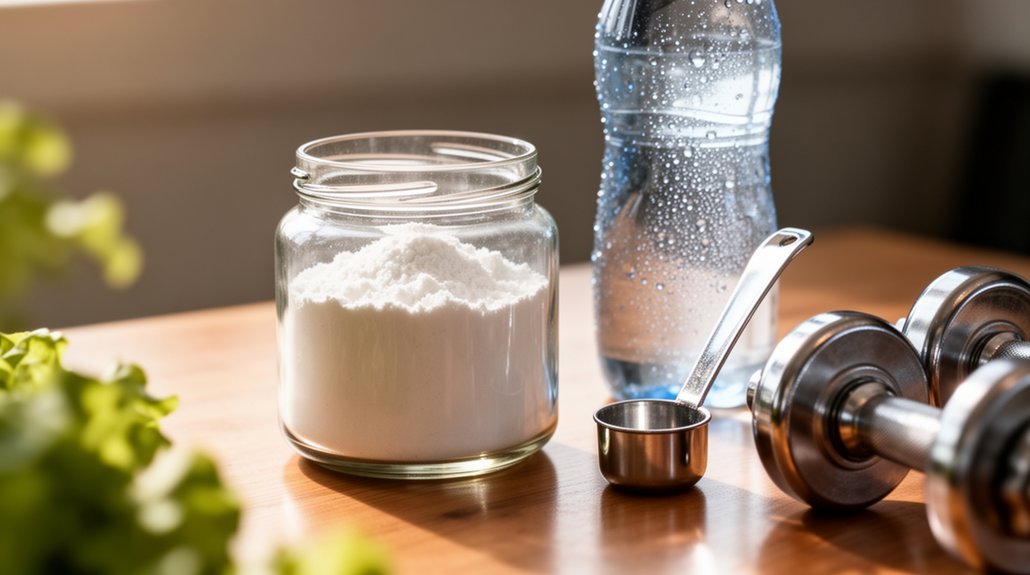
Once you’ve picked creatine monohydrate, the next question is how much to take. Most adults do well with 3–5 g per day, the standard maintenance range. If you’d rather scale to your size, use 0.03 g/kg of body weight daily.
- Smaller adults: You’ll likely fit the lower end of the range.
- Larger adults: You may need the upper end, or a bodyweight-based dose.
- Timing: Take it whenever you’ll remember; daily consistency matters most.
- Meals: Take it with food if you split doses or want better tolerance.
Creatine is safe for healthy adults at recommended doses, and Mayo Clinic calls it likely safe for up to five years.
Reviews also consider 5–20 g per day safe for most people, but that range exceeds typical maintenance needs. If you have kidney disease, talk to a clinician before you start.
For most beginners, 5 g daily is the simplest starting target.
Do You Need a Loading Phase?
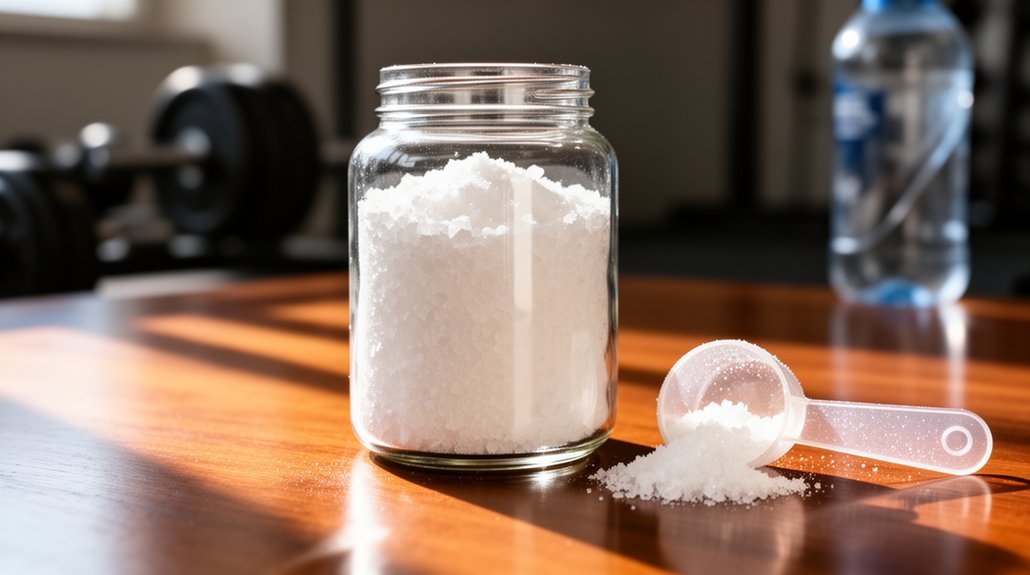
Why load creatine at all when a daily 3–5 g dose works? Speed. Loading means taking 20–25 g daily, split into smaller doses, for five to seven days. That saturates your muscles’ creatine stores quickly.
A regular dose reaches the same saturation point, but it takes about three to four weeks.
You don’t need to load. Loading delivers benefits sooner, not greater long-term ones. After about 30 days, your strength outcomes may look similar either way.
Loading also carries downsides. The higher dose can trigger cramps, nausea, gas, or diarrhea, and you’ll likely retain some water, which raises your scale weight. That gain isn’t fat. Splitting doses helps reduce stomach upset.
Load if you want rapid performance gains or need quick saturation for a short-term goal. Skip it if you’re a beginner, have a sensitive stomach, or prefer simplicity.
Either way, you’ll reach the same muscle saturation level.
Frequently Asked Questions
What Time of Day Is Best to Take Creatine?
The best time is whenever you’ll remember to take it every day. Research doesn’t show a clear winner between morning, evening, before workouts, or after workouts, because your muscles build creatine stores over time.
Consistency matters most, so you should take it on rest days too. Try pairing it with breakfast or your post-workout shake.
If you’ll never miss a dose at night, that works just as well for you.
Should You Take Creatine on Rest Days?
Yes, you should take creatine on rest days. Your muscles store creatine, and daily intake keeps those stores elevated, while skipping days can let levels drift down.
You don’t need a special rest-day schedule, either. Stick with the same 3 to 5 grams you’d take on training days, and take it whenever it’s convenient, like with a meal.
If you’ve loaded, daily doses help you stay saturated. Consistency matters most.
Can You Mix Creatine With Coffee or Other Drinks?
Yes, you can mix creatine with coffee or other drinks.
Creatine monohydrate stays stable in fresh coffee for short periods, so you don’t need to worry about a quick stir-and-drink routine.
Let very hot coffee cool slightly first, and don’t leave the mixture sitting for hours.
If coffee upsets your stomach, space them apart.
Water, juice, milk, smoothies, and protein shakes work well too, so drink whichever you’d like immediately.
Is Creatine Safe for Teenagers or Older Adults?
Creatine’s generally safe for healthy older adults, but you’ll want caution with teenagers.
If you’re older, research shows it doesn’t harm your liver or kidneys, especially when you pair it with resistance training.
Still, talk to a clinician first if you’ve got kidney disease, diabetes, or high blood pressure.
If you’re a teen, studies haven’t found harm, yet long-term data are lacking, so you should get parental and medical approval.
What Happens if You Stop Taking Creatine?
Your muscle creatine levels drop gradually, returning to baseline over about four to six weeks.
You’ll lose one to three kilograms of water weight within the first week, so your muscles may look less full and you’ll feel less bloated.
You might notice slightly weaker high-intensity performance or endurance.
You won’t lose muscle suddenly, and you’ll keep most gains if you keep training.
You won’t experience withdrawal or hormonal problems.
Conclusion
Creatine is one of the most researched, affordable, and effective supplements you can take. You don’t need fancy formulas or complicated protocols. Stick with creatine monohydrate, take 3–5 grams daily, and stay consistent. You’ll likely notice better strength, performance, and recovery over time. If you’ve got health concerns or take medication, talk with your doctor first. Otherwise, you’re ready to start. Keep it simple, stay patient, and let the science work for you.