Best Creatine Monohydrate Supplements, Ranked
You don’t need a fancy formula to get results. Pick pure creatine monohydrate with reliable third-party testing from NSF or Informed Choice. Thorne is your best overall choice, and Nutricost gives you the best budget option. You’ll pay $0.25 to $0.42 per serving on average. Take 3–5 g daily, and you’ll saturate your muscles in about four weeks. Stick around, and you’ll uncover exactly how testing, cost, and dosing details can sharpen your final choice.
Key Takeaways
- Choose pure creatine monohydrate at 5 g per serving with minimal added ingredients, since unflavored powders usually offer more purity than capsules.
- Third-party testing from NSF or Informed Choice verifies label accuracy and screens for banned substances, which matters most for competitive athletes.
- Thorne, Optimum Nutrition Micronized Creatine, and Transparent Labs Creatine HMB are top overall picks, with Thorne, Onnit, and Momentous favored for athletes.
- Swolverine (unflavored), Sports Research, and Momentous rank highest for pure monohydrate, while Thorne, Muscle Milk Pro Series, and Nutricost offer the best value.
- Costs average $0.25 to $0.42 per serving, larger containers lower the price, and a 3–5 g daily dose is safe for healthy adults.
Best Creatine Monohydrate Picks at a Glance
Most 2026 roundups agree on the basics: you want pure creatine monohydrate, 5 g per serving, and as few extras as possible.
Look for pure creatine monohydrate at 5 g per serving, with as few extras as possible.
Third-party testing separates the best products from the rest, so you’ll want NSF or Informed Choice certification if you compete.
Here’s where the top picks land:
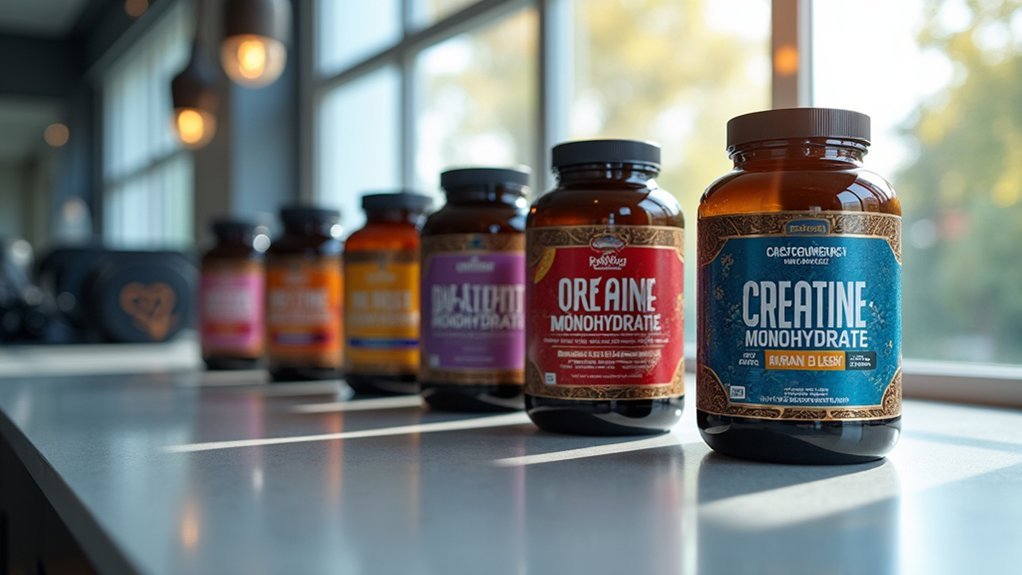
Best overall: Transparent Labs Creatine HMB, Thorne Creatine, or Optimum Nutrition Micronized Creatine Monohydrate for a budget staple.
Best value: Thorne Creatine, Muscle Milk Pro Series, or Nutricost. Prices range from 13 cents to $1.85 per serving, so don’t assume cost signals quality.
Best pure monohydrate: Swolverine for unflavored, Sports Research for non-GMO, Momentous for purity.
Best for athletes: Onnit stands out in testing, while Thorne and Momentous also suit performance-focused buyers.
Best by format: NOW Sports capsules if you dislike powder.
Gummies are growing but aren’t the monohydrate standard. Micronized powders mix easily and appeal broadly. Travel packs help. Creatine supports intense exercise by helping the body produce adenosine triphosphate for quick bursts of energy.
What Makes a Creatine Monohydrate Worth Buying?
Not every tub of creatine monohydrate deserves a spot in your cart, and a few key factors separate the good ones from the rest.
You’ll want to check for third-party testing, look for a short ingredient list that signals purity, and compare cost per serving instead of sticker price.
Thorne Creatine is NSF Certified for Sport, which shows that an independent lab has tested it for safety.
Keep those three points in mind, and you’ll spot a quality product quickly.
Third-Party Testing Matters
Because creatine monohydrate is such a simple ingredient, it’s easy to assume every tub delivers the same thing, but manufacturing quality varies a lot from brand to brand.
Independent certification verifies that the product contains what the label claims and meets quality standards, and it can screen for banned substances, which matters most if you’re subject to drug testing.
NSF Certified for Sport is the most visible standard. It requires a cGMP facility inspection, tests each batch before sale, checks label claims against the finished product, and screens for nearly 300 banned substances.
Look for a certification mark, not vague “lab tested” claims, and confirm the product appears in NSF’s database.
Some brands add heavy metal, microplastic, or PFAS testing, publish certificates of analysis, which signals stronger quality control. If you prefer a non-powder format, Lemme creatine gummies come in Blue Raspberry and Sour Apple flavors, so check whether they carry the same kind of certification before buying.
Purity and Simple Ingredients
When you’re comparing tubs, the ingredient list tells you more than the marketing does. Look for creatine monohydrate only, with no flavors, sweeteners, colors, or fillers. Unflavored powders often say “no other ingredients,” which makes verification easy.
Capsules and tablets add excipients like magnesium stearate, silica, gelatin, and coatings you don’t need.
Purity matters just as much. Well-controlled manufacturing can reach about 99.9% purity, and creatine monohydrate should deliver 87.9% creatine by molecular weight. Don’t confuse “micronized” with purity; it only describes particle size.
Poorly controlled production has been linked to dicyandiamide, dihydrotriazine, thiourea, and heavy metals like lead and mercury, so avoid unverified products.
Check the Supplement Facts panel. It should show a clear serving size and exact creatine amount. Skip proprietary blends.
Cost Per Serving
Price per serving is the fastest way to filter creatine monohydrate, and most good options land below $0.50 for a standard 5 g scoop.
Check the dose first, though. A cheap sticker price can hide a smaller serving, so you should calculate cost against 5 g per day.
Products between $0.30 and $0.50 per serving are strong value picks, while midrange options run about $0.46 to $0.61. Nutricost Micronized Creatine Monohydrate costs just $0.25 per serving for a full 5 g dose, making it one of the cheapest options available.
Premium blends can hit $1.50 or more, and gummies often cost $1.09 to $2.00 per serving. Unless you need the convenience, you don’t need to pay that premium.
Container size matters. Larger 100- or 200-serving tubs cost less per scoop, and autoship can cut the price.
Plain powder beats capsules, which need multiple pills for 5 g.
Thorne Creatine Monohydrate: Best Overall
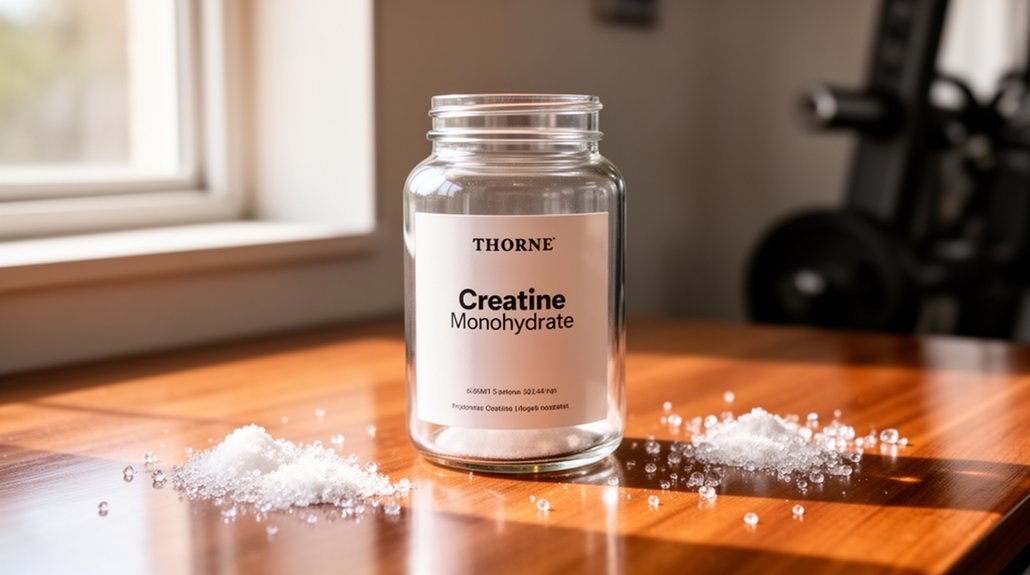
Thorne Creatine Monohydrate earns our best-overall pick by doing one thing well: it delivers 5 g of micronized creatine monohydrate per serving, the most researched form of creatine, with almost nothing else in the tub.
The formula contains only creatine monohydrate and silicon dioxide as an excipient, and the unflavored powder has no added sugar. The micronized powder is colorless and odorless, so it dissolves easily and won’t change how your drink tastes.
Quality is the other reason it wins. Thorne tests each ingredient for identity, purity, and potency, and screens for heavy metals, pesticides, and harmful microbes.
It also tests the finished product through its expiration date. If you compete, NSF Certified for Sport matters: it verifies label claims and screens for nearly 300 substances banned by major athletic organizations.
Mix one scoop into at least eight ounces of liquid daily for a 5 g maintenance dose. Daily consistency is key for optimal benefits, so it helps to take it at the same time each day.
Nutricost Creatine Monohydrate: Best Budget
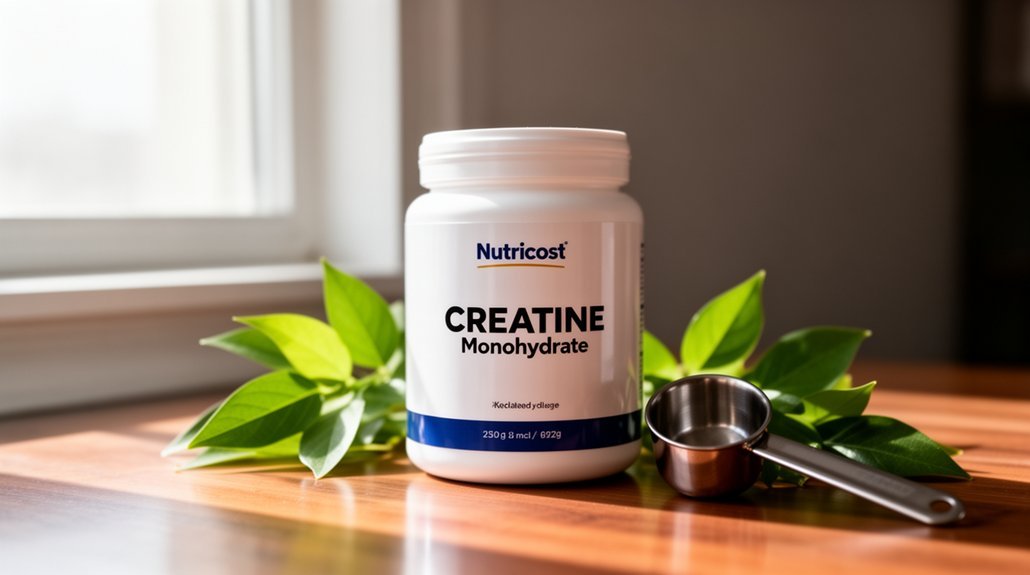
Nutricost Creatine Monohydrate gives you the same 5 g dose of micronized creatine monohydrate as pricier tubs, often for much less.
The 500 g tub costs $16.97 on Nutricost’s site and $21.50 at Target, and it delivers 100 servings. If you buy the 300 g multi-tub bundle, you’ll pay as little as $0.22 per serving. Heavy users can grab the 1 kg size for long-term use.
Reviews back up the value. Nutricost’s 500 g powder page shows 1,733 reviews with 88% positive ratings, and Target shoppers give it about 4.4 out of 5 stars.
Amazon reviewers most often praise its value, quality, and effectiveness.
The unflavored powder mixes easily into water, shakes, or pre-workout drinks. If you don’t want powder, you can choose 750 mg or 3,000 mg capsules.
Prefer flavor? Nutricost offers Blue Raspberry, Fruit Punch, and Coastal Explosion. The Creapure version earns just 76% positive sentiment.
1st Phorm Micronized Creatine: Best Clean Label
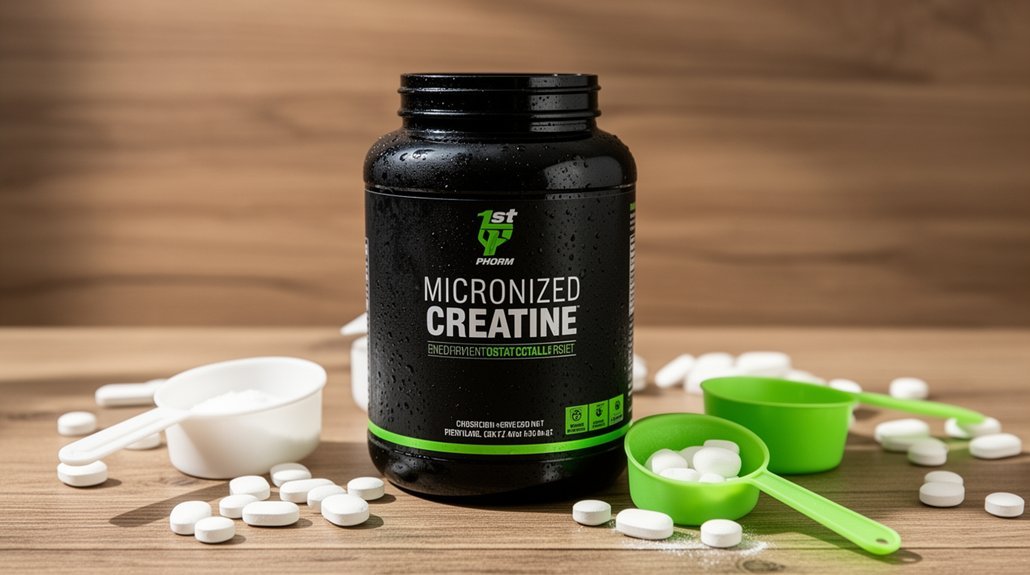
1st Phorm Micronized Creatine keeps things simple: it’s 5 g of creatine monohydrate per serving, with nothing else in the tub. The formula is unflavored, has no listed sweeteners, and includes no coloring agents or performance blends.
You’re getting a minimalist product, and the micronized form gives you a finer powder that mixes more easily.
The bigger draw is certification. The product carries NSF Certified for Sport status and appears in NSF Sport listings. 1st Phorm also says it tests products in FDA SQF Level 3, cGMP-compliant facilities.
If you compete or just want independent verification, that matters.
At $24.99 on the brand’s creatine collection page, you’re paying for purity and certification, not extras. Choose it if you want a no-flavor, no-additive formula and value NSF Certified for Sport status.
It’s a strong pick for strength, power, and recovery. Skip it if you want flavored options or blends.
Which Creatine Monohydrate Is Third-Party Tested?
How can you tell which creatine monohydrate has been independently tested? Start with the seal, then verify it in an official database. Brand-only claims don’t carry the same weight as published certifications.
NSF Certified for Sport is the strongest credential. It verifies that the product contains what the label states, screens for nearly 300 banned substances, and involves independent batch testing.
You’ll find Sports Research, Bare Performance Nutrition, Thorne, Momentous, and Blue Star Nutraceuticals tied to NSF certification. Klean Athlete Klean Creatine markets itself as NSF certified too.
Informed-Sport is another major credential, especially if you’re subject to drug testing.
ScanCheck lists 1,523 certified creatine products, including 963 from Informed-Sport and 67 from Informed-Choice.
Testing claims vary by program. Some brands also screen for heavy metals, pesticides, microbes, or PFAS, as Momentous does.
Check the label, then search NSF’s listings or ScanCheck before you buy any creatine tub.
How Much Does Creatine Monohydrate Cost Per Serving?
Most creatine monohydrate powders cost between $0.25 and $0.42 per 5 g serving, though budget options dip closer to $0.22. Nutricost’s 500 g tub at $21.50 gives you 100 servings, while a 200-serving product at $49.99 runs about $0.25 per serving.
Container size matters more than sticker price. A larger tub often costs more upfront, but you’ll pay less per serving. Always divide the price by the number of servings before you buy. For example, a 60-serving product at $24.99 costs about $0.42 per serving, while NatureWise’s 100-serving tub at $23.99 costs about $0.24.
Format changes the math, too. Capsules ($29.95–$32.95) and gummies ($34.95) usually cost more per gram than powder, which remains the most cost-efficient choice.
Unless you need the convenience, stick with powder. A realistic benchmark is $0.20 to $0.50 per serving; anything well above that means you’re overpaying. Always compare per-serving cost, not total price.
Creatine HMB vs. Monohydrate: Is It Worth It?
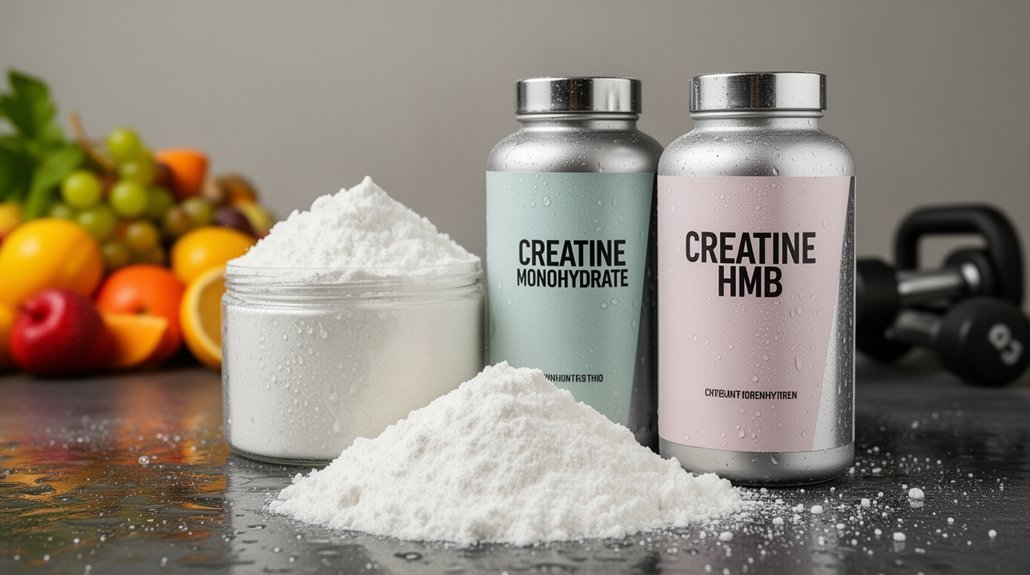
Is creatine HMB worth the extra money? For most healthy lifters, probably not. Creatine monohydrate remains the best-supported form for strength, power, and lean-mass gains, and researchers use it as the benchmark in most performance trials.
HMB isn’t creatine. It’s a leucine metabolite marketed for muscle preservation and recovery. Recent evidence doesn’t back those claims well. A 2025 meta-analysis found no significant strength or muscle gains from HMB in healthy older adults, and a 2025 review in young subjects reached the same conclusion, though the evidence was very low certainty.
HMB is a leucine metabolite marketed for muscle preservation and recovery, but recent evidence doesn’t back those claims well.
Combining the two shows some promise. A 2019 review found that 3–10 g of creatine monohydrate plus 3 g of HMB daily improved strength, anaerobic performance, and body composition in 1–6 weeks.
Still, results vary, and a collegiate rugby study showed no advantage over monohydrate alone.
You’ll get the most reliable return by sticking with plain creatine monohydrate.
How Much Creatine Monohydrate Should You Take?
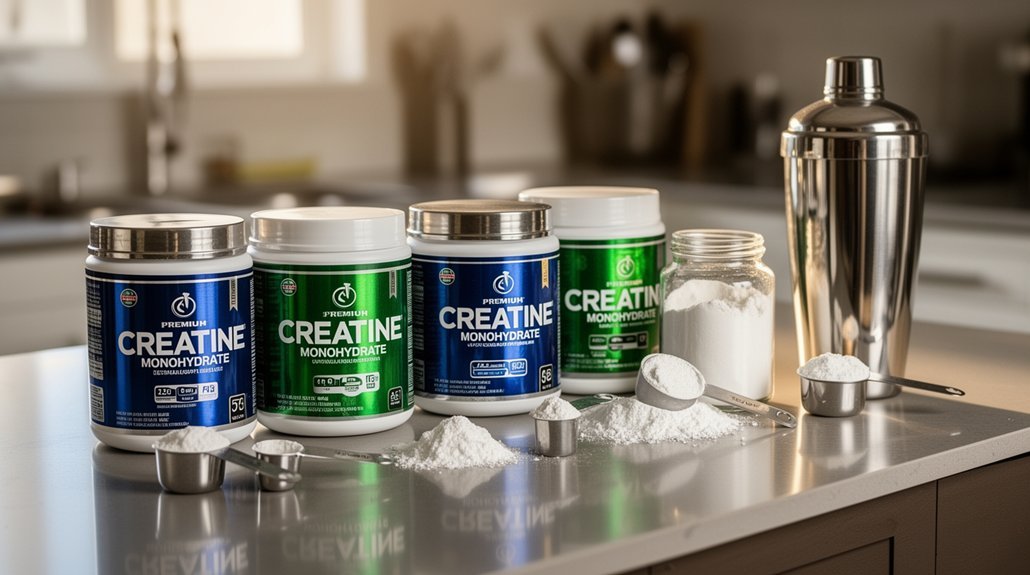
Wondering how much creatine monohydrate you need? Most healthy adults do well with 3–5 g daily. Here’s how to dose it:
- Maintenance only: Take 3–5 g daily, or roughly 0.03 g/kg of body mass. You’ll reach muscle saturation in about four weeks.
- Loading phase: Take 20 g daily, split into four 5 g servings, for 5–7 days. You can calculate about 0.3 g/kg daily. Loading saturates your muscles faster.
- Post-loading maintenance: Drop back to 3–5 g daily, and you’ll keep your muscles saturated.
- Timing: Take it at any consistent time. Total daily intake and consistency matter more than pre- or post-workout timing.
Recommended doses are safe for healthy adults, with no increased kidney or liver risk reported. Long-term safety data are strongest at 3–5 g daily, while routine high dosing has less evidence.
If you’ve got kidney disease or take medications, talk with a clinician before you start.
Frequently Asked Questions
Does Creatine Monohydrate Cause Bloating or Water Retention?
Yes, creatine monohydrate can cause temporary water retention, but it rarely causes lasting bloating.
If you’re loading with 20 grams daily, you’ll likely gain one to three kilograms, mostly water inside your muscles, which makes them look fuller. That effect won’t persist over several weeks.
Bloating typically comes from stomach upset, and large doses trigger it more often. If you’re sensitive, you can skip loading and take a standard dose.
Should I Take Creatine Before or After My Workout?
Take it after your workout if you can, since some studies show a slightly bigger gain in muscle and strength that way.
The edge is small, though, and you’ll still get great results taking it before training. Consistency matters most, so you should take 3 to 5 grams of creatine monohydrate every day, including rest days.
Mixing it with food or protein can also help you stick with it daily.
Can Women Safely Take Creatine Monohydrate?
Yes, you can safely take creatine monohydrate if you’re healthy.
Research hasn’t linked it to kidney, liver, or cardiovascular harm in women, and you’ll see the best results when you pair it with resistance training. Stick to 3 to 5 grams daily. You don’t need a loading phase.
You might notice mild water retention or stomach discomfort. Talk with your doctor first if you’re pregnant, breastfeeding, or have kidney issues.
Does Creatine Monohydrate Expire or Lose Potency Over Time?
Yes, creatine monohydrate technically expires, but it’s remarkably stable, so you won’t see dramatic potency loss.
Research shows no noticeable degradation after three years at room temperature. When it does break down, some creatine converts into creatinine, which mostly reduces effectiveness rather than creating safety problems.
Moisture and heat speed that process, so you should keep the powder sealed, cool, and dry. Check for clumping, odd smells, or color changes.
Can I Mix Creatine With Coffee or Other Beverages?
Yes, you can mix creatine with coffee or other beverages. Research doesn’t show a clear interaction between caffeine and creatine, so your morning cup works fine.
Just don’t let it sit around, though. Heat and acidity speed up creatine’s breakdown into creatinine, so you’ll want to drink it soon after stirring.
Water, juice, smoothies, and shakes work too. If you must store a drink briefly, refrigerate it to slow degradation.
Conclusion
Creatine monohydrate is one of the most researched supplements you can buy, so you don’t need to overthink it. Thorne is your best bet if you want top-tier quality, while Nutricost keeps your costs low. If you prefer a simple ingredient list, 1st Phorm delivers. Check for third-party testing, compare cost per serving, and stick with a consistent daily dose. You’ll see the best results when you take it regularly and train hard.